ASCII Ecology: Emergent Patterns in an LLM Primordial Soup
| epoch 0 | epoch 30 | epoch 80 | epoch 150 | |||
| ╗┐◇▫■╠╔}═_+└┐═▀□ | → | ╬═╬═╬═╬═╬═╬═╬═╬═╬═╬═ | → | ├─┼─┼─┼─┼─┼─┼─┼─┼─┼─ | → | ░░▒▓█▓▒░░▒▓█▓▒░░▒▓█▓ |
| (┐:█}|■#_◇─╩+→◇╦ | ║░║▒║░║▒║░║▒║░║▒║░║▒ | │░░│▓▓│░░│▓▓│░░│▓▓│░ | ░▒▓█▓▒░░▒▓█▓▒░░▒▓█▓▒ | |||
| ▀→╔═╱║↓↑○┘@{╚╱┼. | ╠═╬═╬═╬═╬═╬═╬═╬═╬═╬═ | │▓▓│░░│▓▓│░░│▓▓│░░│▓ | ▒▓█▓▒░░▒▓█▓▒░░▒▓█▓▒░ |
The Experiment
Computational Life: How Well-formed, Self-replicating Programs Emerge from Simple Interaction (Agüera y Arcas et al., 2024) showed that self-replicating programs emerge from random interactions in a BFF (Brainfuck variant) interpreter. They initialize a soup of random programs, repeatedly pick random pairs, concatenate them, run the result through the interpreter, and split the output back into two new programs. Over time, self-replicators (quines) emerge and take over.
For fun, I took their experimental setup and changed it from a brainfuck interpreter to a temp 0 Haiku prefill, and got convergence to a few dominant species when starting with initial ASCII art, Wikipedia sentences, or random character soups. Prefill was necessary to avoid responses like (“User: k$3]vR#~8xQ!pZ&7jW*2m@” → Claude: “I’m not sure what you’re asking…”)
I got no sharp phase transitions; there’s a quick convergence to self-replicating patterns, and after that there are ecological dynamics. The self-replicators tend to be simple repeated patterns like in the banner for this post, which shows snapshots of the “Interesting (16x16)” run.
Setup
- 100 cells, each initialized with random content (varies by condition — see below).
- Each epoch: 50 random pairs are selected. Their strings are concatenated and placed as an assistant prefill. The model continues for up to k² tokens. The continuation is split back into two new strings.
- Model: Claude Haiku 4.5, temperature 0.
Conditions tested:
| Condition | Init | k | System prompt (excerpt) | Epochs |
|---|---|---|---|---|
| Plain | random 16×16 ASCII art grid | 16 | “…No explanations, just the grids.” | 150 |
| “Make it pretty” | same | 16 | “…Make it pretty.” | 150 |
| “Keep it interesting” | same | 16 | “…Keep it interesting.” | 150 |
| “Imbue your personality” | random 32×32 ASCII art grid | 32 | “…Imbue your personality in it.” | 200 |
| Wikipedia | random Wikipedia sentences (32 ch) | 32 | (none) | 200 |
| ASCII art 1D | random ASCII art strings (64 ch) | 64 | (none) | 150 |
ASCII Ecology
The video shows all 100 cells as a 10×10 grid. Each frame is one epoch. The first 10 epochs play at 1 second each (to show the initial diversity), then 0.3 seconds per epoch for the rest.
To keep the layout stable across frames, cells are sorted by cosine distance to a fixed reference vector (the mean character-frequency vector of the final population). Cells that look like the eventual winners cluster top-left; holdouts drift bottom-right. This means cells shift position smoothly as they converge, rather than jumping around.
Species Gallery
Species are classified by most common character, most common 3×3 block (grid conditions), or most common 4-gram (1D conditions).
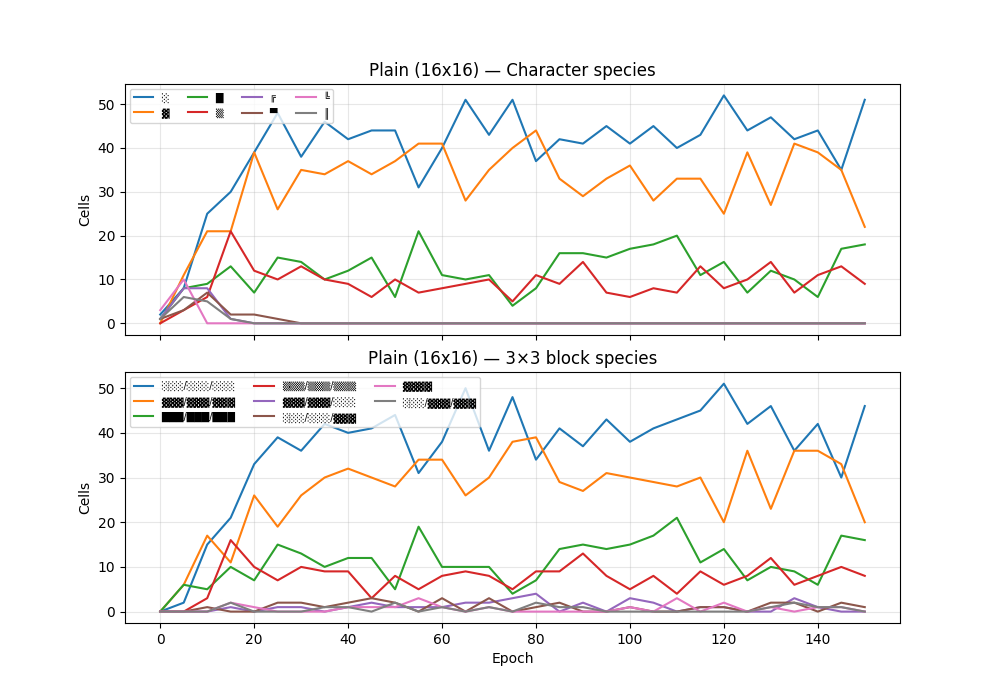
Plain (16×16, epoch 150)
3×3 block (14 distinct): 46/100 ░░░/░░░/░░░, 20/100 ▓▓▓/▓▓▓/▓▓▓, 16/100 ███/███/███
Character (4 distinct): ░(51), ▓(22), █(18), ▒(9)
Sample of 5 cells (out of 100):
░░░░░░░░░░░░░░░░
░░░░░░░░░░░░░░░░
░░░░░░░░░░░░░░░░
···
▓▓▓▓▓▓▓▓▓▓▓▓▓▓▓▓
░░░░░░░░░░░░░░░░
···
░░░░░░░░░░░░░░░░
░░░░░░░░░░░░░░░░
░░░░░░░░░░░░░░░░
···
▓▓
▓▓▓▓▓▓▓▓▓▓▓▓▓▓
▓▓▓▓▓▓▓▓▓▓▓▓▓▓▓▓
···
█████████████████
█████████████████
█████████████████
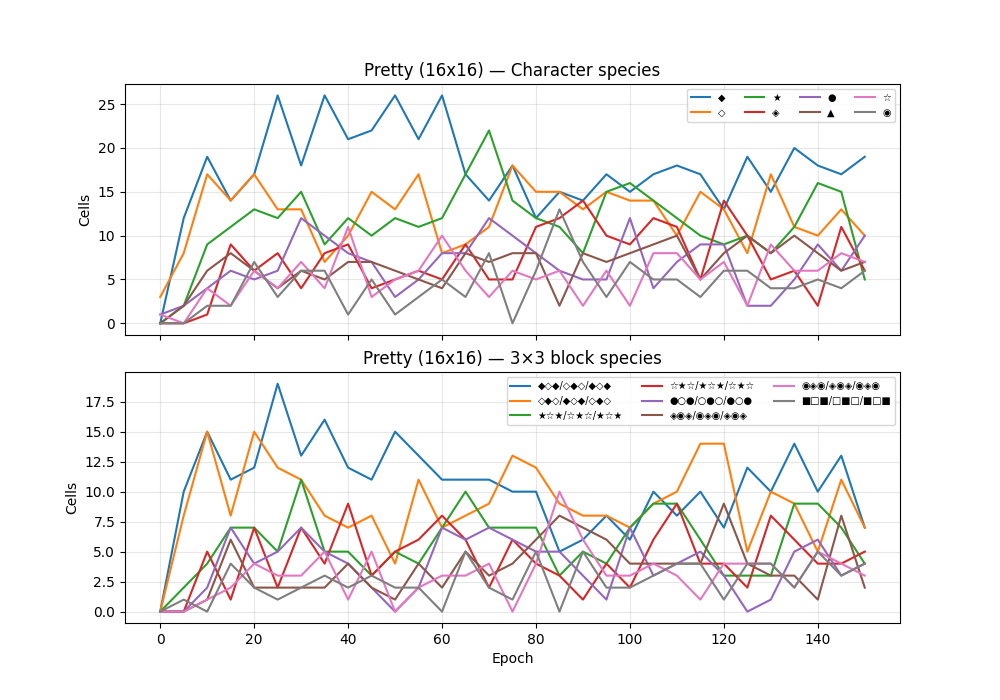
“Make it pretty” (16×16, epoch 150)
3×3 block (57 distinct): 7/100 ◆◇◆/◇◆◇/◆◇◆, 7/100 ◇◆◇/◆◇◆/◇◆◇, 5/100 ☆★☆/★☆★/☆★☆
Character (23 distinct): ◆(19), ●(10), ◇(10), ☆(7)
Sample of 5 cells (out of 100):
▲▼▲▼▲▼▲▼▲▼▲▼▲▼▲▼
▼▲▼▲▼▲▼▲▼▲▼▲▼▲▼▲
···
◇◆
◆◇◆◇◆◇◆◇◆◇◆◇◆◇◆◇◆◇◆◇◆◇◆◇◆◇◆
···
▪▫▪▫▪▫▪▫▪▫▪▫▪▫▪▫▪▫▪▫▪▫▪▫▪▫▪▫▪▫▪▫
▫▪▫▪▫▪▫▪▫▪▫▪▫▪▫▪▫▪▫▪▫▪▫▪▫▪▫▪▫▪▫▪
▪▫▪▫▪▫▪▫▪▫▪▫▪▫
···
◇◆◇◆◇◆◇◆◇◆◇◆◇◆◇◆
◉◈◉◈◉◈◉◈◉◈◉◈◉◈◉◈
···
☆★☆★☆★☆★☆
★☆★☆★☆★
◆◇◆◇◆◇◆◇◆◇◆◇◆◇◆◇
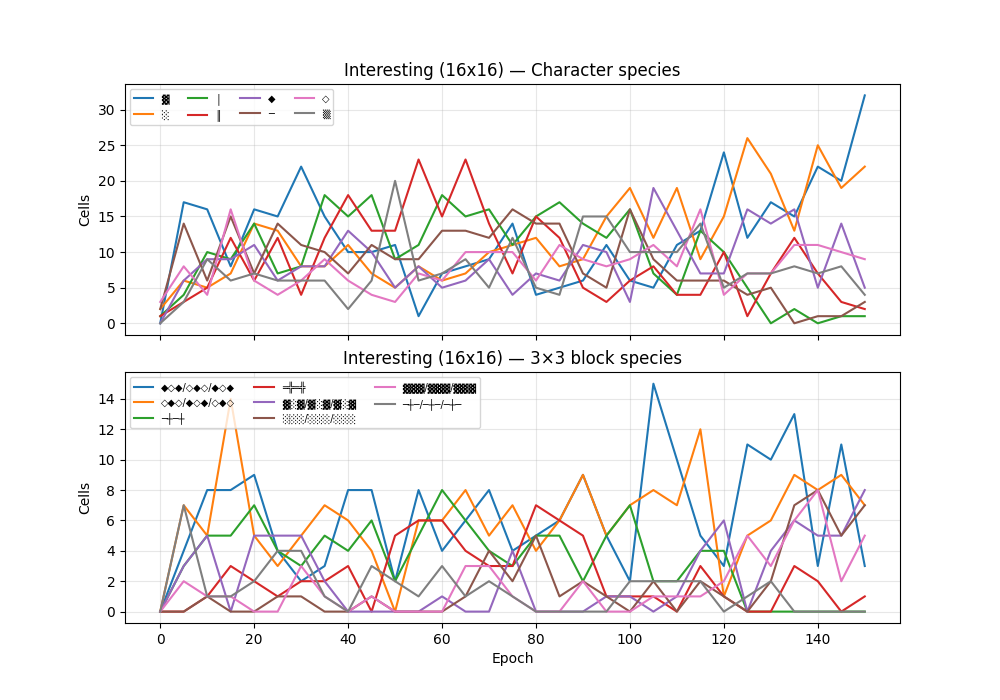
“Keep it interesting” (16×16, epoch 150)
3×3 block (55 distinct): 8/100 ▓░▓/▓░▓/▓░▓, 7/100 ░░░/░░░/░░░, 7/100 ◇◆◇/◆◇◆/◇◆◇
Character (17 distinct): ▓(32), ░(22), ◇(9), ═(8)
Sample of 5 cells (out of 100):
▲░░░░░░░░░░░░░░▲
▲▲▲▲▲▲▲▲▲▲▲▲▲▲▲▲
···
●○●○●○●○●○●○●○●○
○●○●○●○●○●○●○●○●
●○●○●○●○●○●○●○●○
···
▒▒▒▒▒▒▒▒▒▒▒▒▒▒▒▒
▒░░░░░░░░░░░░░░▒
▒░▓▓▓▓▓▓▓▓▓▓▓▓░▒
···
▲▼▲▼▲▼▲▼▲▼▲▼▲▼▲▼
▼▲▼▲▼▲▼▲▼▲▼▲▼▲▼▲
▲▼▲▼▲▼▲▼▲▼▲▼▲▼▲▼
···
▒░▓▓▓▓▓▓▓▓▓▓▓▓░▒
▒░▓▓▓▓▓▓▓▓▓▓▓▓░▒
▒░▓▓▓▓▓▓▓▓▓▓▓▓░▒
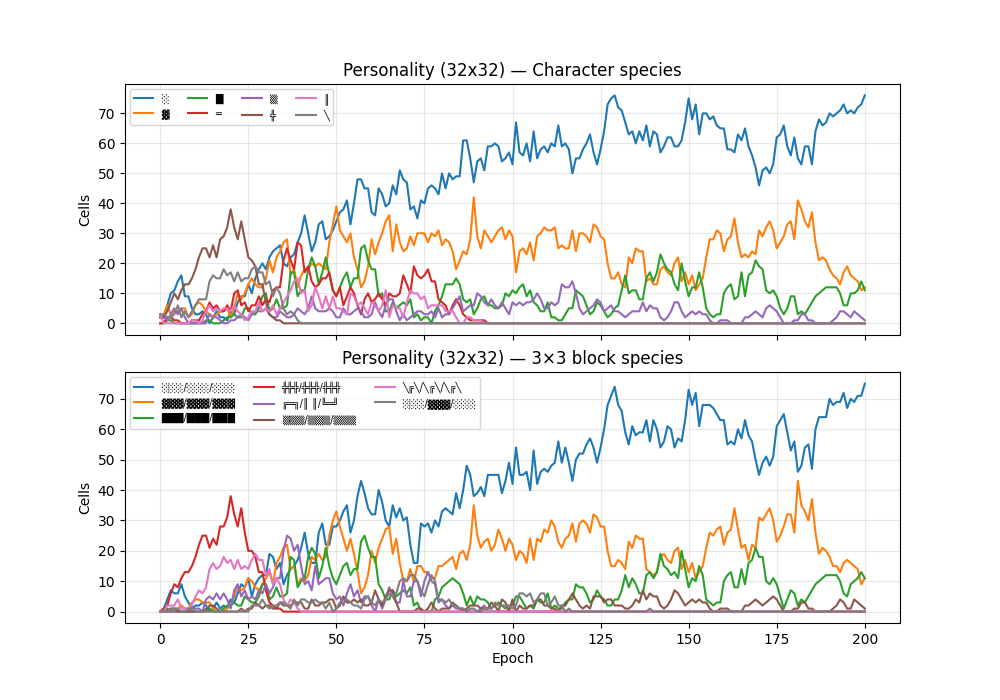
“Imbue your personality” (32×32, epoch 200)
3×3 block (6 distinct): 75/100 ░░░/░░░/░░░, 11/100 ███/███/███, 11/100 ▓▓▓/▓▓▓/▓▓▓
Character (4 distinct): ░(76), ▓(12), █(11), ▒(1)
Sample of 5 cells (out of 100):
██░░░░░░░░░░░░░░░░░░░░░░░░░░░░░░██░░░░░░░░░░░░░░░░░░░░░░░░░░░░░░██
██░░░░░░░░░░░░░░░░░░░░░░░░░░░░░░██░░░░░░░░░░░░░░░░░░░░░░░░░░░░░░██
██░░░░░░░░░░░░░░░░░░░░░░░░░░░░░░██░░░░░░░░░░░░░░░░░░░░░░░░░░░░░░██
···
░░░░░░░░░░░░░░░░░░░░░░░░░░░░░░░░░░░░░░░░░░░░░░░░░░░░░░░░░░░░░░░░░░░░░░
░░░░░░░░░░░░░░░░░░░░░░░░░░░░░░░░░░░░░░░░░░░░░░░░░░░░░░░░░░░░░░░░░░░░░░
░░░░░░░░░░░░░░░░░░░░░░░░░░░░░░░░░░░░░░░░░░░░░░░░░░░░░░░░░░░░░░░░░░░░░░
···
▓▓▓▓▓▓▓▓▓▓▓▓▓▓▓▓▓▓▓▓▓▓▓▓▓▓▓▓▓▓▓▓▓▓▓▓▓▓▓▓▓▓▓▓▓▓▓▓▓▓▓▓▓▓▓▓▓▓▓▓▓▓▓▓▓▓▓▓▓▓
▓▓▓▓▓▓▓▓▓▓▓▓▓▓▓▓▓▓▓▓▓▓▓▓▓▓▓▓▓▓▓▓▓▓▓▓▓▓▓▓▓▓▓▓▓▓▓▓▓▓▓▓▓▓▓▓▓▓▓▓▓▓▓▓▓▓▓▓▓▓
▓▓▓▓▓▓▓▓▓▓▓▓▓▓▓▓▓▓▓▓▓▓▓▓▓▓▓▓▓▓▓▓▓▓▓▓▓▓▓▓▓▓▓▓▓▓▓▓▓▓▓▓▓▓▓▓▓▓▓▓▓▓▓▓▓▓▓▓▓▓
···
██░░░░░░░░░░░░░░░░░░░░░░░░░░░░░░██░░░░░░░░░░░░░░░░░░░░░░░░░░░░░░██
██░░░░░░░░░░░░░░░░░░░░░░░░░░░░░░██░░░░░░░░░░░░░░░░░░░░░░░░░░░░░░██
██░░░░░░░░░░░░░░░░░░░░░░░░░░░░░░██░░░░░░░░░░░░░░░░░░░░░░░░░░░░░░██
···
██░░░░░░░░░░░░░░░░░░░░░░░░░░░░░░██░░░░░░░░░░░░░░░░░░░░░░░░░░░░░░██
██░░░░░░░░░░░░░░░░░░░░░░░░░░░░░░██░░░░░░░░░░░░░░░░░░░░░░░░░░░░░░██
██░░░░░░░░░░░░░░░░░░░░░░░░░░░░░░██░░░░░░░░░░░░░░░░░░░░░░░░░░░░░░██
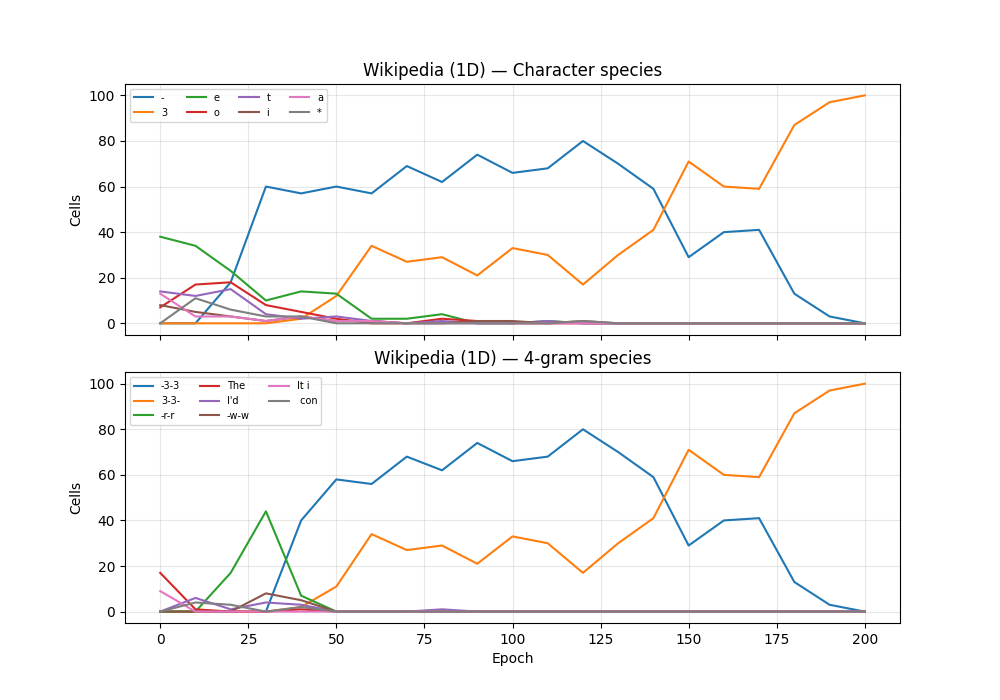
Wikipedia (1D, k=32, epoch 200)
4-gram (1 distinct): 100/100 3-3-
Character (1 distinct): 3(100)
Sample of 5 cells (out of 100):
3-3-3-3-3-3-3-3-3-3-3-3-3-3-3-3-
···
3-3-3-3-3-3-3-3-3-3-3-3-3-3-3-3-
···
3-3-3-3-3-3-3-3-3-3-3-3-3-3-3-3-
···
3-3-3-3-3-3-3-3-3-3-3-3-3-3-3-3-
···
3-3-3-3-3-3-3-3-3-3-3-3-3-3-3-3-
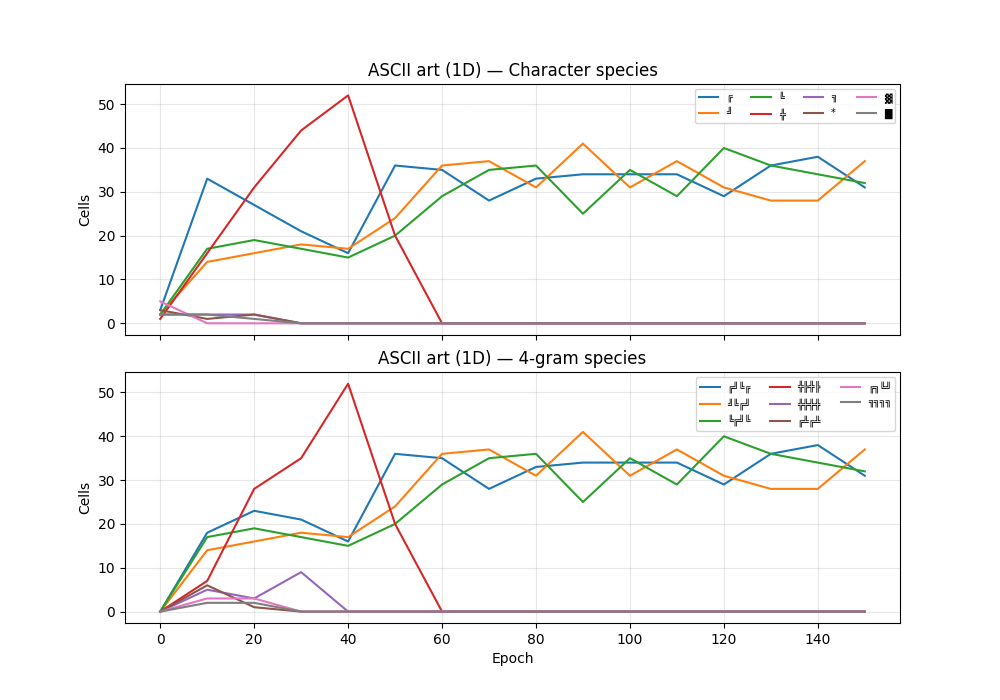
ASCII art (1D, k=64, epoch 150)
4-gram (3 distinct): 37/100 ╝╚╔╝, 32/100 ╚╔╝╚, 31/100 ╔╝╚╔
Character (3 distinct): ╝(37), ╚(32), ╔(31)
Sample of 5 cells (out of 100):
╚╔╝╚╔╝╚╔╝╚╔╝╚╔╝╚╔╝╚╔╝╚╔╝╚╔╝╚╔╝╚╔╝╚╔╝╚╔╝╚╔╝╚╔╝╚╔╝╚╔╝╚╔╝╚╔╝╚╔╝╚╔╝╚
···
╝╚╔╝╚╔╝╚╔╝╚╔╝╚╔╝╚╔╝╚╔╝╚╔╝╚╔╝╚╔╝╚╔╝╚╔╝╚╔╝╚╔╝╚╔╝╚╔╝╚╔╝╚╔╝╚╔╝╚╔╝╚╔╝
···
╔╝╚╔╝╚╔╝╚╔╝╚╔╝╚╔╝╚╔╝╚╔╝╚╔╝╚╔╝╚╔╝╚╔╝╚╔╝╚╔╝╚╔╝╚╔╝╚╔╝╚╔╝╚╔╝╚╔╝╚╔╝╚╔
···
╔╝╚╔╝╚╔╝╚╔╝╚╔╝╚╔╝╚╔╝╚╔╝╚╔╝╚╔╝╚╔╝╚╔╝╚╔╝╚╔╝╚╔╝╚╔╝╚╔╝╚╔╝╚╔╝╚╔╝╚╔╝╚╔
···
╝╚╔╝╚╔╝╚╔╝╚╔╝╚╔╝╚╔╝╚╔╝╚╔╝╚╔╝╚╔╝╚╔╝╚╔╝╚╔╝╚╔╝╚╔╝╚╔╝╚╔╝╚╔╝╚╔╝╚╔╝╚╔╝
Metrics
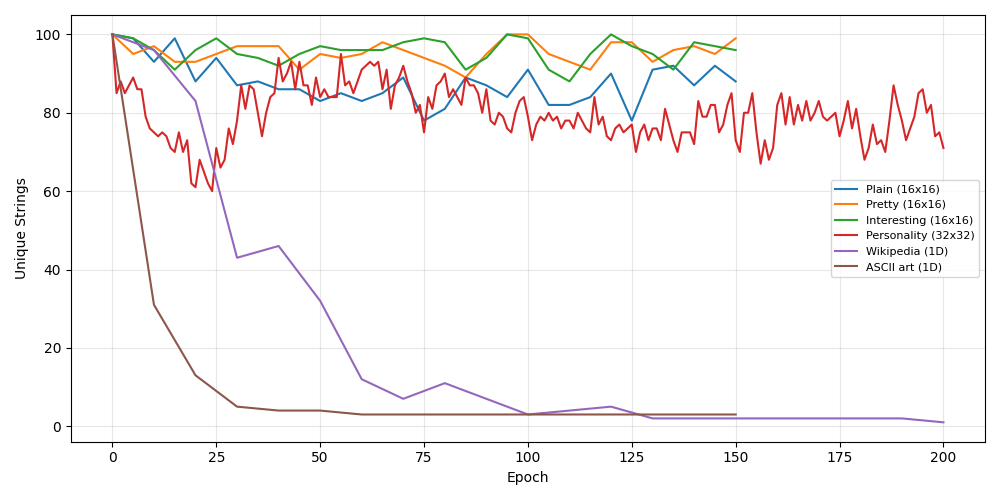
Unique strings
How many of the 100 cells are distinct each epoch.
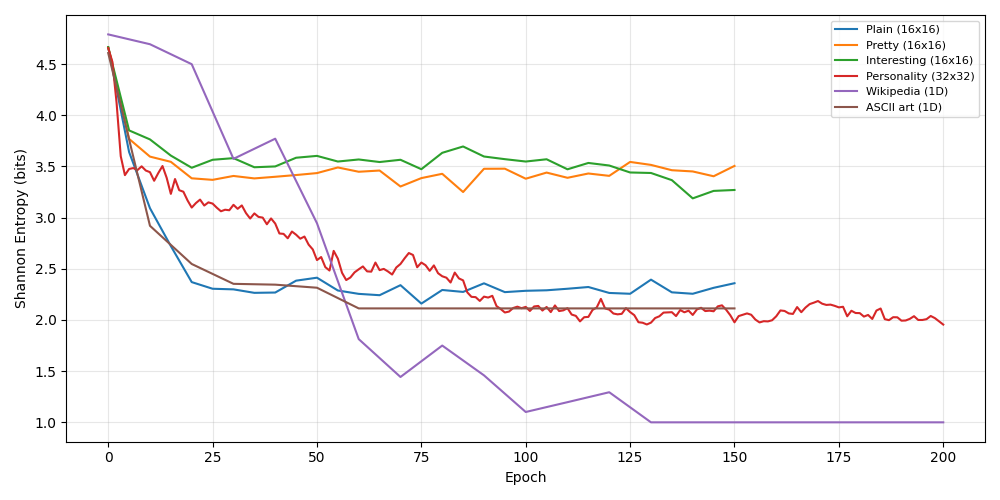
Shannon entropy
Byte-level entropy of the concatenated soup. Drops as the soup converges to fewer distinct characters.
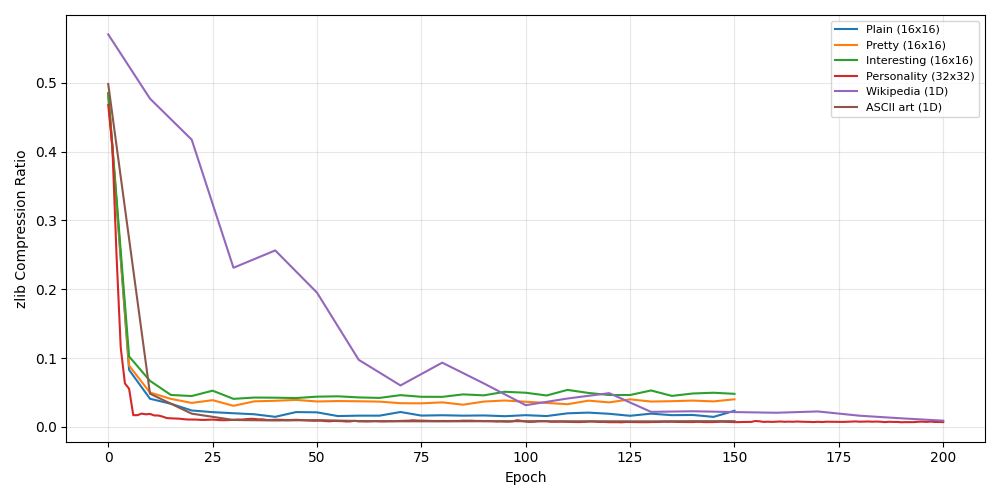
Compression ratio
compressed_size / raw_size (zlib). Drops toward 0 as the soup becomes highly regular.
Semantics-aware metrics
We use sentence embeddings to get compression metrics that are more sensitive to semantics.
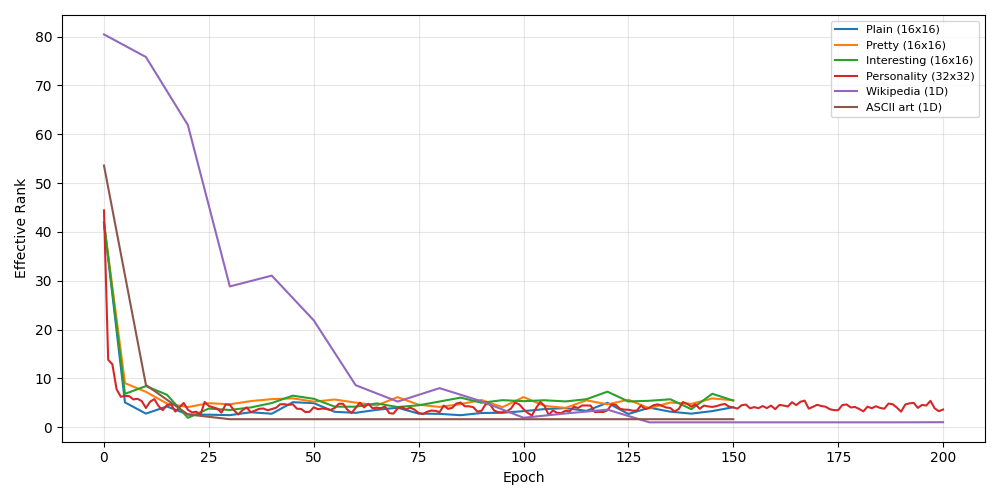
Effective rank
Participation ratio of SVD singular values of the centered embedding matrix (all-MiniLM-L6-v2). High when the population spans many semantic directions; low when it collapses to a few clusters.
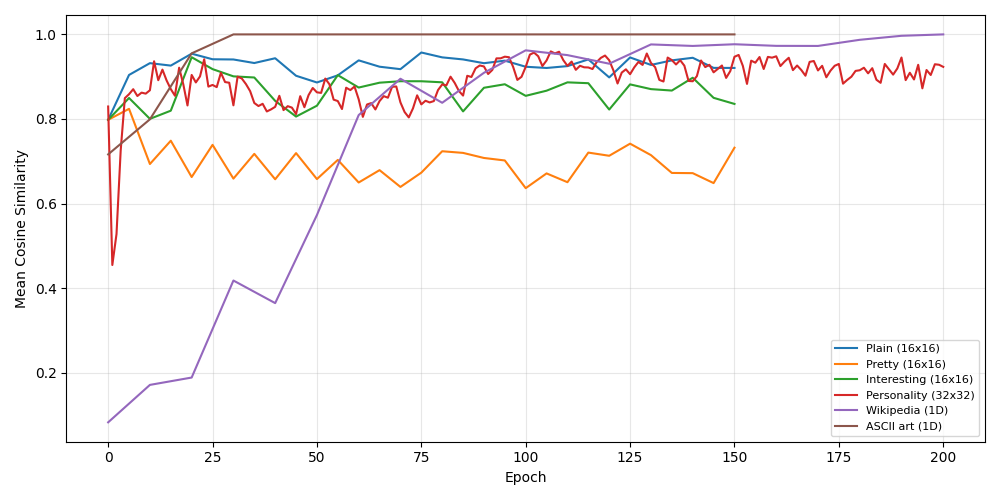
Mean cosine similarity
Average pairwise cosine similarity across all 100 embeddings. Rises as the population converges.
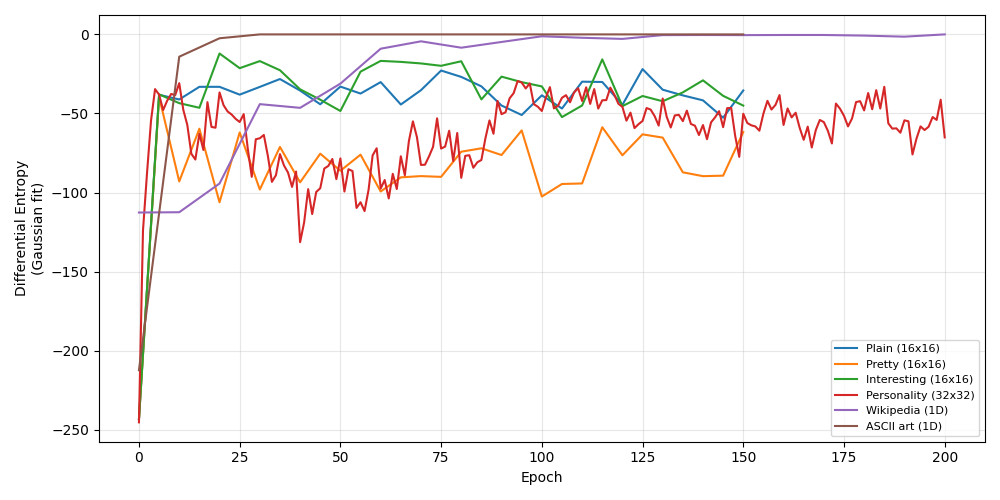
Differential entropy
Differential entropy of a Gaussian fit to the embedding distribution: 0.5 * (d * ln(2πe) + ln det Σ) where Σ is the sample covariance and d is the number of non-degenerate eigenvalues (eigenvalues > 1e-12 are kept, near-zero ones dropped).